
Leaks & Pipes
Slab Leak Detection in El Dorado Hills, CA
A slab leak happens when a water line running beneath the concrete foundation develops a leak, and it can be hard to spot until damage begins to show. Wedlisse Plumbers helps El Dorado Hills homeowners confirm whether a leak is under the slab and locate it precisely before any floor is opened.
These leaks sit below the foundation, so they announce themselves indirectly: a warm patch on the floor from a leaking hot-water line, the faint sound of running water with everything off, an unexplained jump in the water bill, or cracks and moisture working their way up through the slab. Because the pipe is out of sight, accurate detection matters more than usual — finding the exact spot keeps access work as small as possible.
Left alone, a slab leak rarely resolves on its own and can slowly undermine flooring and the foundation. Confirming whether symptoms truly point to a slab leak, rather than another source, is the first step to avoiding unnecessary floor work. Once we know where the leak is, we lay out the practical repair paths and the trade-offs of each, so the plan fits your home rather than a default.

- Residential & commercial service
- Clear service recommendations
- Respectful property protection
- Locally focused coverage
Signs You May Need Slab Leak Detection
A few things homeowners often notice before calling us:
- A warm spot on the floor, often from a leaking hot-water line
- The sound of running water with all fixtures turned off
- Cracks appearing in flooring, tile or the foundation
- Moisture or dampness seeping up through the slab
- An unexplained jump in the water bill
- Low water pressure that develops gradually
- Areas of flooring that feel damp, buckled or discolored
- A musty smell or mildew near the base of walls
Common Causes
- Corrosion of copper or metal lines routed under the slab
- Abrasion where a pipe rubs against concrete or rebar as it expands
- Ground and soil movement shifting or stressing buried lines
- High water pressure adding strain to under-slab piping
- Poorly supported or aging original plumbing beneath the foundation
- Chemical reactions between the pipe and surrounding soil conditions
How We Approach the Job
- 1
Confirm the symptoms
We review warm spots, sounds, moisture and bill changes, and check the meter to confirm water is being lost somewhere in the system.
- 2
Isolate and listen
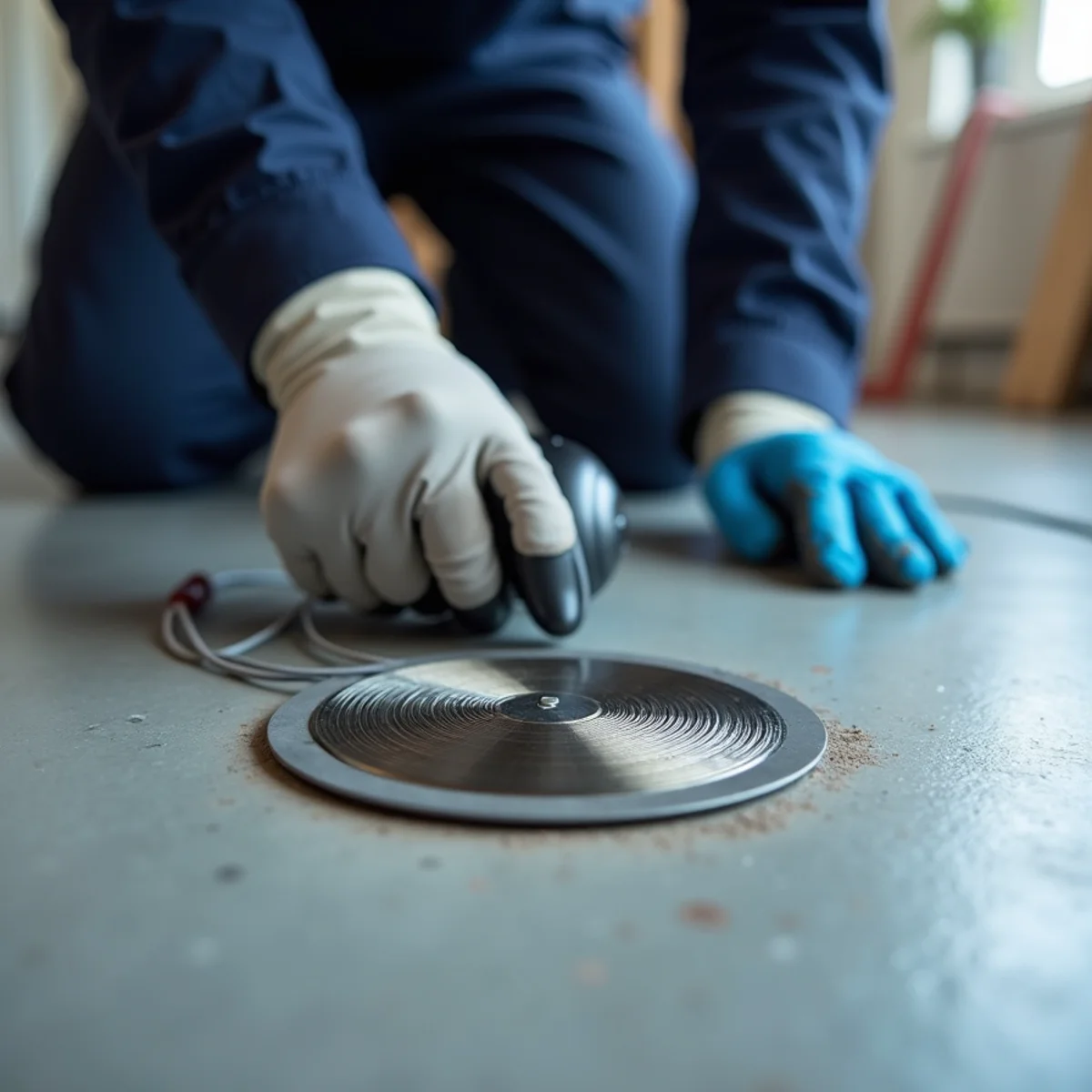
Using acoustic and electronic equipment along with pressure testing, we determine whether the leak is under the slab and trace it to a location.
- 3
Pinpoint the source
We narrow the leak to a specific area beneath the foundation and mark it, so any access is as focused as possible.
- 4
Review repair paths
We explain the practical options — spot repair, rerouting the line, or a broader fix — and the trade-offs of each for your home.
Your Options
Locating under the slab
Detecting a slab leak relies on listening for pressurized water beneath concrete and using electronic tools to trace it, combined with pressure testing to confirm the leak is on an under-slab line. Pinpointing the exact spot is what allows a focused repair rather than opening large areas of flooring on guesswork.
Spot repair versus rerouting
Once the leak is found, one option is to access and repair that section directly through the slab, which can make sense for an isolated leak in otherwise sound piping. Another is to reroute the affected line through walls or the attic, bypassing the slab entirely, which avoids opening the foundation and can be a better fit when the buried pipe is aging. The right choice depends on the pipe's condition, the leak's location and how the home is built.
When repiping enters the picture
If under-slab lines have leaked more than once, or the piping is aging throughout the home, replacing the run — or repiping a larger portion of the home above the slab — may be worth considering. Continuing to chase individual leaks in failing pipe can cost more over time than addressing the underlying problem. We lay out whether a targeted fix or a longer-term solution fits your situation.
Not sure what's wrong? Let's take a look.
Describe what's happening and we'll help you figure out the next step.
Benefits of Timely Service
- Confirmation of whether a leak is truly under the slab
- Precise locating that limits how much flooring must be opened
- Clear, honest repair options rather than a single default
- Less risk of ongoing foundation and flooring damage
- A plan suited to the pipe's condition and your home's layout
- Rerouting options that can avoid opening the foundation
Residential
- Detection of hot- and cold-line leaks beneath the foundation
- Warm-spot and running-water investigations
- Pressure testing to confirm an under-slab leak
- Guidance on spot repair versus rerouting
- Coordination for larger repairs when needed
- Confirming whether symptoms point to a slab leak or another source
Commercial
- Slab leak locating for ground-floor commercial spaces
- Investigations for property managers of slab-built units
- Planning access with minimal disruption to operations
- Reroute planning to keep businesses running where possible
How to tell a slab leak from another problem
Not every warm floor or damp patch is a slab leak, and jumping to open a floor without confirming can be a costly mistake. Some clues point more strongly toward an under-slab line than others, and combining them with a meter check and pressure testing gives a clearer picture.
Clues worth noting before we arrive
- A warm patch on the floor that has no other explanation
- Running-water sounds when every fixture is off
- A water bill that rose without a change in usage
- New cracks in tile, flooring or the foundation
- Moisture or mildew appearing at the base of walls
What affects the cost of a slab leak repair
Detection itself is the same careful process regardless of the outcome, but the repair that follows varies, and several factors shape it. Understanding them helps once we know what and where the leak is.
Factors that shape the repair
- Whether a single line or several under-slab runs are affected
- The leak's location and how accessible it is beneath the slab
- The condition and age of the surrounding piping
- A direct spot repair through the slab versus rerouting the line
- Flooring type and how much must be opened and restored
Slab leaks in foothill homes
Seasonal soil movement and expansive ground conditions in parts of the El Dorado Hills area can stress lines routed under a slab, and higher pressure in some hillside homes may add to it over the years. A professional inspection can determine whether symptoms point to a slab leak or another source, which helps avoid unnecessary floor work and keeps the repair focused on the real problem.
Areas We Serve
Slab Leak Detection for customers in El Dorado Hills and selected nearby communities:
Slab Leak Detection FAQs
Common clues include a warm spot on the floor from a leaking hot-water line, the sound of running water when nothing is on, and unexplained moisture or cracks. These signs are worth investigating, since a confirmed slab leak rarely resolves on its own.
Detection itself is non-invasive — we locate the leak with acoustic and electronic tools first. Whether the floor needs to be opened depends on the repair you choose, since some leaks can be addressed by rerouting the line instead of going through the slab.
It depends on the situation. Rerouting avoids opening the foundation and can make sense when the buried pipe is aging, while a direct spot repair may be simpler for an isolated leak in otherwise sound piping. We explain the trade-offs so you can decide.
It can be a contributing factor. Seasonal soil movement may shift or stress lines under a foundation over time, and combined with corrosion or high pressure this can lead to a leak. A professional assessment can help identify the likely cause.
It is worth acting on promptly. While the water is usually contained beneath the slab at first, ongoing moisture can damage flooring and the foundation, and the leak will keep wasting water until it is repaired. Confirming and locating it early keeps the options open.
Coverage varies widely between policies, and we cannot speak for your insurer. Many policies treat the leak and the resulting damage differently, so it is worth reviewing your specific policy. We focus on detecting and repairing the leak itself and can document what we find.
Need Slab Leak Detection in El Dorado Hills?
Call for current service availability, or send a request and we'll follow up to schedule an assessment.
For an active leak or urgent plumbing concern, call for current service availability.