
PEX vs. Copper Repiping: How to Choose
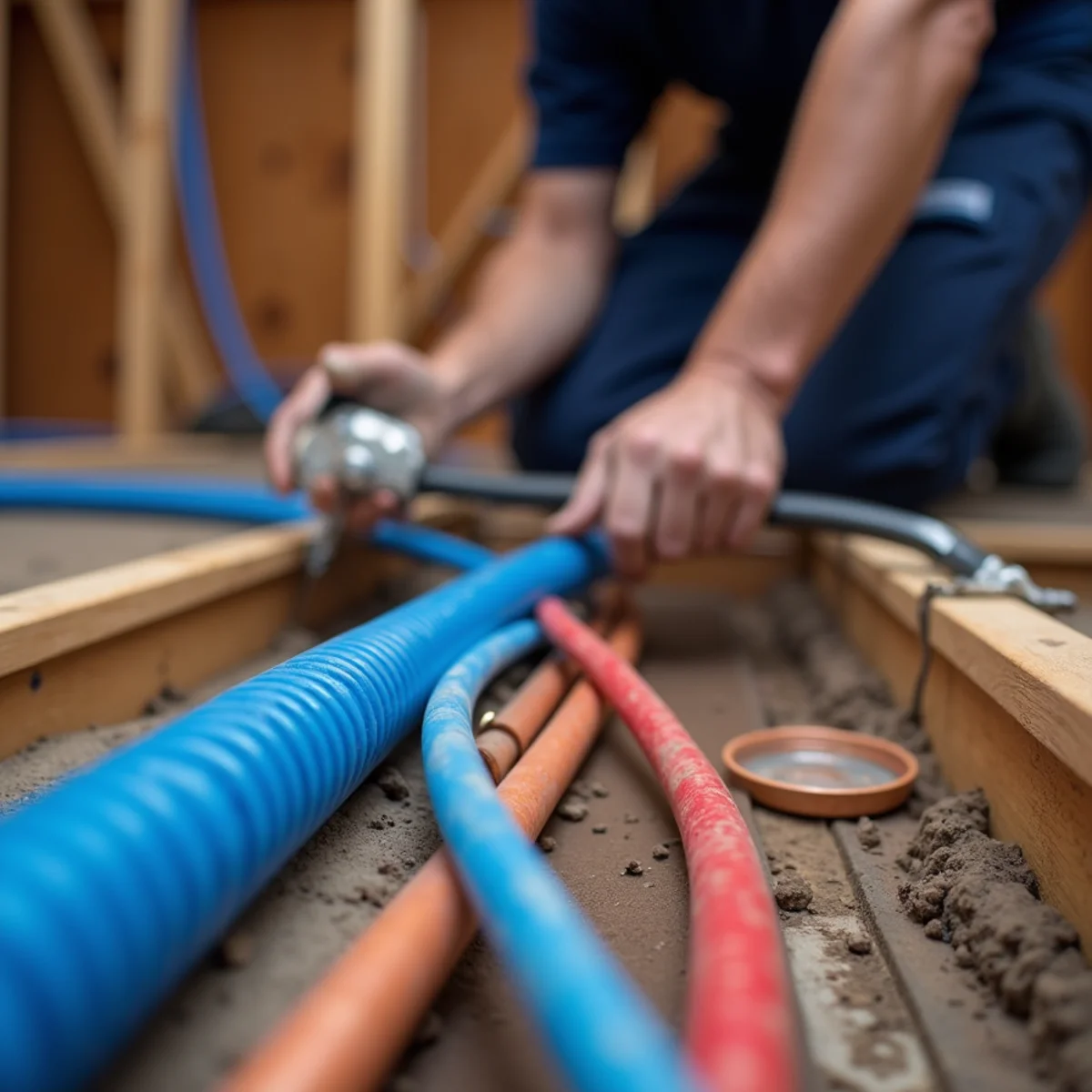
When a home has repeated leaks, corroded pipes, or aging plumbing throughout, repiping can be a lasting fix rather than another temporary patch. Once you decide to repipe, the next question is usually which material to use, and the two leading choices are PEX and copper.
Both are proven materials with real strengths, and there is no universal winner. The right pick depends on your home, your water chemistry, your budget, how long you plan to stay, and how the pipe will be routed through finished walls.
This article compares PEX and copper across the factors that matter most, explains the different PEX types and installation layouts, and lays out how to think through the decision so you can have a more informed conversation with a plumber about repiping your home.
When repiping comes up
Repiping usually enters the picture when patching individual pipes stops making sense. If you are chasing leak after leak, seeing rusty or discolored water, or living with pipes made from materials that tend to fail with age, replacing the system can be more practical than repeated repairs.
It also comes up during larger remodels, when walls are already open, and when an inspection reveals pipe that is corroding from the inside. In those cases, tackling the whole system at once can be less disruptive than returning for repeated fixes later.
A plumber can evaluate whether spot repairs or a full repipe is the more sensible path for your situation, and that assessment usually starts with looking at the pipe you already have and the water running through it.
Copper in brief
Copper has been used in residential plumbing for decades and has a long track record. It is a rigid metal pipe joined with soldered or pressed fittings, and it has long been a familiar sight in walls, basements, and crawl spaces.
Homeowners often value copper for its longevity and its familiarity to inspectors and buyers. It stands up well to heat, does not degrade under sunlight the way some plastics can, is naturally resistant to bacteria, and is fully recyclable at the end of its life.
It does, however, tend to cost more in both material and labor, and it can be affected by certain water conditions over time. In areas with aggressive or very hard water, copper can develop pinhole leaks after many years, which is one reason local water chemistry factors into the decision.
PEX in brief
PEX, short for cross-linked polyethylene, is a flexible plastic tubing that has become widely used in newer construction and repipes. Its flexibility lets it run through walls with fewer fittings and bends, which can speed installation and reduce the number of joints where leaks could start.
PEX resists scale and corrosion well, handles chlorinated water without pitting, and gives a bit more when water freezes than rigid pipe, though no pipe is truly freeze-proof. It is typically less expensive to install than copper, which is part of why it has become so common.
PEX does have its own considerations. It should not be installed in direct sunlight or run outdoors, it is kept away from certain heat sources, and in some homes rodents have been known to chew it, so a plumber routes and protects it accordingly. It also relies on specific fittings and tools for reliable connections.
PEX types and installation layouts
PEX is not a single product, and the way it is run through a home affects performance as much as the tubing itself. Knowing the basics helps you follow a plumber's recommendation.
PEX-A, PEX-B, and PEX-C
These labels describe how the tubing is manufactured. They differ in flexibility, in how connections are made, and in traits like resistance to kinking. A plumber selects a type based on the layout, the fittings used, and the conditions in your home rather than on the label alone.
Home-run manifold versus trunk-and-branch
A home-run layout sends a dedicated line from a central manifold to each fixture, which can improve pressure balance and let you isolate one fixture at a time. A trunk-and-branch layout runs a main line with branches, similar to traditional copper. Each has tradeoffs in material use and control, and a plumber can suggest which suits your home.
Head-to-head comparison
Here is how the two materials tend to stack up across the details homeowners ask about most. Treat these as general tendencies; your home and water may shift the balance.
Cost factors
PEX is generally the more budget-friendly option, both for material and for the labor to install it, largely because it runs faster with fewer joints. Copper usually carries a higher total cost, driven by material price and the added time to route and solder rigid pipe. Actual figures depend on home size, access, and layout, so a plumber quotes after seeing the system rather than from a chart.
Durability and lifespan
Copper is known for a long service life and stands up well to heat. PEX also offers a long expected lifespan and resists the scale buildup and pinhole corrosion that can trouble metal pipe in some water conditions. In homes with aggressive water, PEX may hold up longer than copper in practice, while copper can excel where conditions are gentle.
Water quality and taste
Both materials are approved for drinking water. Some homeowners feel copper delivers a more neutral taste, while others notice a slight taste from new PEX that tends to fade after the system is used. Water chemistry in your area may influence how each performs and how each ages.
Installation and disruption
PEX flexibility often means fewer wall openings and a faster job, sometimes finished in a day or two for a smaller home. Copper requires more precise routing and soldered joints, which can add time and access work inside walls and ceilings. Either way, some drywall repair is normally part of a repipe.
Freezing and temperature
Copper tolerates high heat and suits a wide range of systems, including some that PEX is kept away from. PEX has some give if water freezes inside it, which may reduce burst risk, though insulating pipes in cold spaces remains important for both materials.
Signs your home may be a repiping candidate
A few patterns tend to suggest that repiping is worth discussing. None of them means you must repipe immediately, but together they can tip the balance away from another round of patch repairs.
The clearest signal is repetition. When leaks keep appearing in different places, the pipe itself is often reaching the end of its useful life rather than failing at one unlucky spot.
- Frequent leaks in different parts of the house
- Rusty, brown, or metallic-tasting water
- Visible corrosion or greenish stains on exposed pipes
- Pipes made from materials that are known to fail with age
- Low pressure caused by internal scale or corrosion narrowing the pipe
Which may suit your home
There is no single right answer for every property. PEX often appeals when cost and installation speed are priorities, or when routing through finished walls would otherwise be invasive. Copper often appeals to homeowners who prefer a long-established metal system, plan to stay many years, and do not mind the higher cost.
It also helps to weigh your water and your timeline together. If you intend to keep the home for decades, copper's longevity may matter more than its price. If budget, speed, or aggressive water chemistry is the concern, PEX may make more sense. In some homes a mix of both ends up being the practical choice, keeping sound copper where it makes sense and running PEX elsewhere.
Working with a plumber on the decision
Repiping is a significant project, so it helps to understand what is inside your walls before choosing a material. A plumber can inspect the existing system, note your water conditions, and explain how PEX and copper would each perform in your specific home. In foothill areas where water can run harder, that local read on water chemistry is worth having.
A good conversation also covers the practical side of the job, such as how access will be handled, roughly how long the work takes, whether permits are involved, and what drywall repair to expect afterward. Knowing those details ahead of time makes the project far easier to plan around.
If you are weighing the options, it is reasonable to reach out to a local plumber for an assessment and a clear explanation of the trade-offs, so the material you choose fits both your home and how you live in it.
Need a plumber in El Dorado Hills?
Wedlisse Plumbers helps homeowners across El Dorado Hills and nearby communities. Call or request service any time.
Frequently asked questions
Both are reliable when installed correctly. PEX resists corrosion and scale well and handles chlorinated water, while copper has a long track record and tolerates heat. The right choice depends on your home and water conditions.
Not necessarily. Plumbers plan access points to limit openings, and PEX flexibility can reduce how many are needed. Some drywall work is usually involved, but it is planned rather than random.
Yes. Transitions between the two are common and use proper fittings. Many repipes keep sound copper sections and run PEX elsewhere when it makes sense for the layout.
It varies with home size and access, but many repipes are completed within a few days, and a PEX job can sometimes go faster than copper. A plumber can give a clearer estimate after seeing your system.
PEX resists scale and does not develop the pinhole corrosion that can affect copper in aggressive water, so it is often considered in harder-water homes. That said, water conditions vary, and a professional can advise based on a test.
It can, especially if the old pipe was narrowed by internal scale or corrosion. Repiping restores full pipe diameter, though pressure also depends on the supply and any regulator, which a plumber can evaluate together.
Related articles

Slab Leak Warning Signs Every Homeowner Should Know
A leaking pipe beneath your foundation can hide for months. Learn the early slab leak warning signs, a simple meter test, and how a pro confirms one.

Seven Signs You May Have a Hidden Water Leak
A hidden leak can quietly raise your bill and damage your home for weeks. Here are seven signs worth watching for, and how to check if water is escaping unseen.

What Causes Low Water Pressure?
A trickling shower or slow faucet can have many causes. Here is how to tell whether it is one fixture or the whole house, and what to check next.