Water Softener vs. Whole-House Water Filter
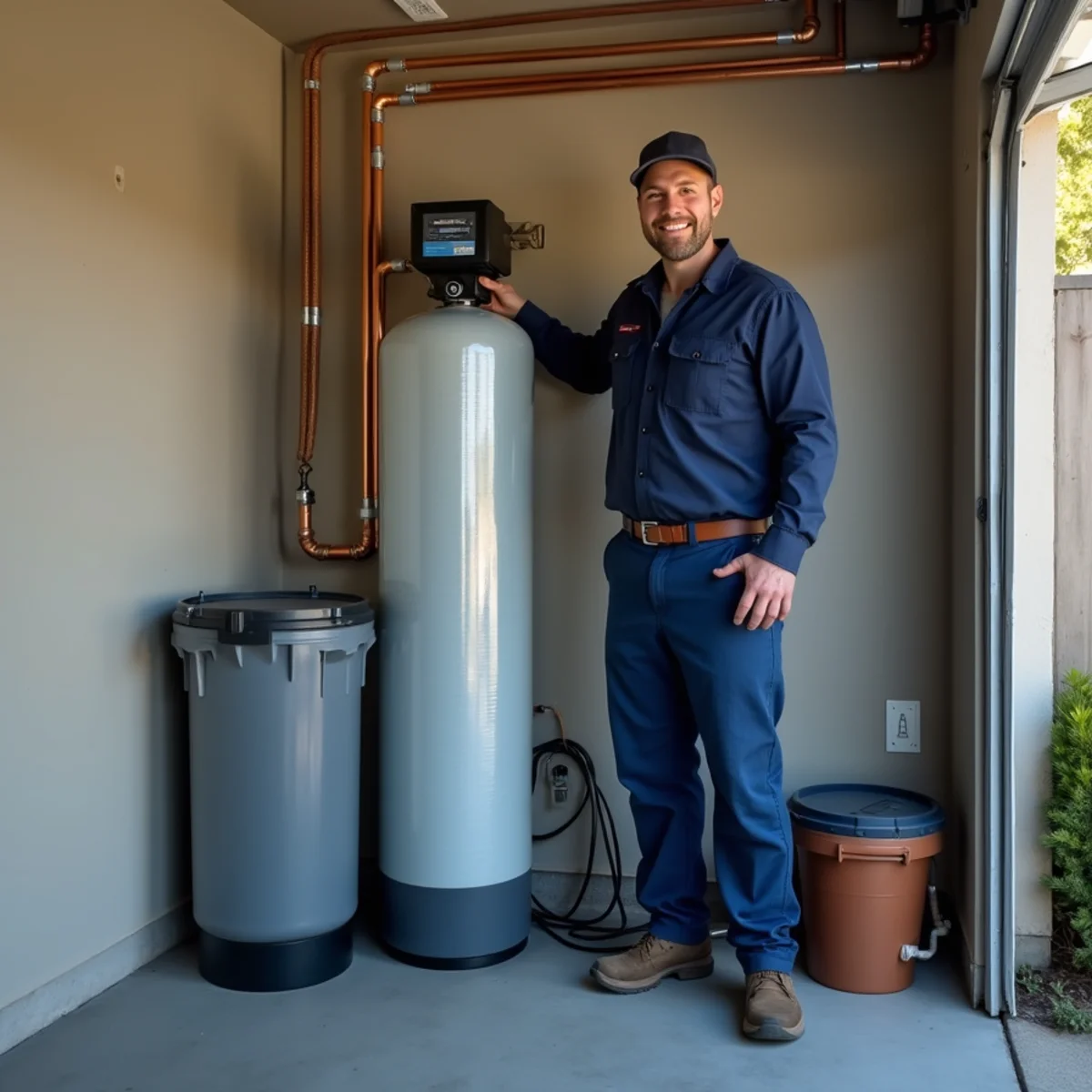
Water softeners and whole-house filters are often mentioned in the same breath, which leads many homeowners to assume they do the same job. They do not. They address different problems, and understanding the distinction is the key to choosing well.
This guide explains what each system does, where they overlap, the misconceptions that trip people up, how point-of-use filters fit in, and how to decide which one, or both, fits your home. It also touches on sizing, installation, and upkeep so you know what to expect.
Water in many El Dorado Hills homes can be on the harder side, which is part of why this comparison comes up so often locally.
They solve different problems
The simplest way to keep these two straight is by the problem each targets. A water softener addresses hardness, the dissolved minerals that cause scale and interfere with soap. A whole-house filter addresses contaminants and aesthetic issues such as chlorine taste, sediment, odors, or specific impurities.
Put another way, softening is about mineral hardness, while filtering is about what you want to remove from the water for taste, clarity, or quality. A system built for one does not automatically handle the other.
Because the two are sold side by side and sometimes bundled, it is easy to buy one expecting it to do the other's job. Getting clear on the distinction up front is the single most useful step in choosing the right equipment.
What a water softener does
A conventional water softener uses a process called ion exchange. Water passes through a bed of resin that swaps the calcium and magnesium that cause hardness for sodium or potassium. The result is softened water that leaves less scale and lathers more easily.
- Reduces limescale on fixtures, glass, and inside appliances
- Helps soap and detergent lather and rinse better
- May reduce sediment and scale buildup in water heaters
A note on sodium and salt-free options
Softeners periodically regenerate, flushing the accumulated minerals and recharging the resin. They add sodium or potassium to the water in small amounts, which is worth noting for anyone monitoring sodium intake. A salt-free conditioner is a different technology that alters how minerals behave rather than removing them; it is sometimes chosen where reducing scale, rather than fully softening, is the goal.
What a whole-house filter does
A whole-house filter treats water as it enters the home so that filtered water reaches every tap. What it removes depends on the type of filter and the media inside it.
- Carbon-based filters can reduce chlorine taste and odor
- Sediment filters capture sand, silt, and rust particles
- Specialized media can target specific contaminants identified by testing
Why it does not replace a softener
A filter does not soften water. Unless it is a combination system, it will not remove the calcium and magnesium that cause hardness. That is the most common point of confusion, so it is worth repeating: a standard whole-house filter and a softener are not interchangeable.
Common misconceptions worth clearing up
A handful of mix-ups come up again and again, and sorting them out early saves money on the wrong equipment.
- A softener is not a filter; it targets hardness, not contaminants like chlorine or bacteria
- A standard whole-house filter is not a softener; it will not stop scale or improve lather
- A salt-free conditioner is not the same as an ion-exchange softener; it changes how minerals behave rather than removing them
- Softened water is not salty to taste; ion exchange adds only small amounts of sodium
Why these matter
Each misconception points a homeowner toward a purchase that will not solve their actual complaint. Someone frustrated by scale who buys a carbon filter, or someone bothered by chlorine taste who buys a softener, ends up disappointed. Matching the technology to the problem is what a water test makes possible.
Point-of-use filters and reverse osmosis
Whole-house treatment is not the only option. Some concerns, especially about drinking water taste or specific contaminants, are handled more economically at a single tap rather than for the entire home.
- Under-sink or countertop filters treat water at one faucet, often for drinking and cooking
- Reverse osmosis systems push water through a fine membrane to remove a wide range of dissolved substances, usually at the kitchen sink
- Refrigerator and pitcher filters address taste and some contaminants on a small scale
How they combine
These point-of-use options can complement, rather than replace, a whole-house softener or filter. A common combination is a softener for the whole house plus a dedicated drinking-water filter at the kitchen tap. What makes sense depends on your goals and, again, on what a water test shows.
Can you have both?
Yes, and many homes with both hard water and taste or contaminant concerns use the two together. In a combined setup, the systems are typically installed in a sequence so each does its job. A plumber can advise on the right order and configuration for your water and goals.
Whether both are worth installing depends on what a water test reveals. Hard water with no taste or contaminant issues may only call for a softener. Acceptable hardness but a chlorine taste may point to a filter alone. Both issues together may justify both systems. Installing them together also lets each unit be sized and placed with the other in mind, which tends to work better than adding a second system as an afterthought later on.
How to choose for your home
The most reliable starting point is a water test. It tells you how hard your water is and what, if anything, else is present. From there the choice becomes clearer.
It also helps to weigh your priorities beyond the water itself, such as up-front cost, ongoing maintenance, and how much of the home you want treated. A softener and a filter each add a piece of equipment to look after, so matching the system to a real need, rather than treating for problems you do not have, keeps things simpler and less expensive to run.
- If scale, spotting, and poor lather are your main complaints, a softener targets hardness directly
- If taste, odor, or specific contaminants concern you, a filter suited to those issues is the better fit
- If both are present, a combined approach may make sense
Sizing and placement
Both softeners and filters need to be matched to the household. A system that is too small for a busy home can be overwhelmed during peak demand, while an oversized one is money spent without benefit.
- Softeners are sized to your water hardness and the household's daily water use
- Filters are sized to flow rate so they do not restrict pressure across the home
- Both are typically installed near where the main line enters, which needs space and, for softeners, a drain
Getting it right up front
This is one reason a professional assessment is helpful before buying. Getting the size and placement right at installation avoids pressure or capacity problems later. An undersized softener, for instance, may regenerate too often or let hardness slip through during heavy use, while a filter that is too restrictive can drag down pressure across the whole home.
Installation and maintenance considerations
Both systems involve plumbing work and ongoing upkeep, which is worth factoring into the decision.
Softeners
These need space near where the main line enters, a drain for regeneration, and periodic salt or potassium refills. The resin lasts for years, but the unit needs routine attention.
Filters
These require periodic cartridge or media changes, with the interval depending on the filter type and your water. A neglected filter can become less effective over time, and a clogged one can restrict flow.
Need a plumber in El Dorado Hills?
Wedlisse Plumbers helps homeowners across El Dorado Hills and nearby communities. Call or request service any time.
Frequently asked questions
A softener removes the minerals that cause hardness, reducing scale and improving lather. A whole-house filter targets contaminants and aesthetic issues like chlorine taste, sediment, or odor. They solve different problems.
It depends on your water. Hard water alone may only need a softener, while a taste or contaminant issue may call for a filter. If both are present, the two systems can be combined. A water test is the most reliable guide.
A standard whole-house filter does not soften water, since it does not remove calcium and magnesium. Only a softener or a combination system designed for hardness will address scale and lather issues.
Generally no. A conventional softener uses ion exchange to remove hardness minerals, not chlorine, sediment, or most contaminants. Those call for a filter suited to the specific issue, which is why some homes use both.
For most people it is, though ion-exchange softening adds a small amount of sodium, which anyone on a sodium-restricted diet may want to consider. Some homeowners add a reverse osmosis or drinking-water filter at the kitchen tap for that reason.
Start with a water test. It shows how hard your water is and what else may be present, which points you toward a softener, a filter, or both. A plumber can interpret the results for your home.
Related articles
Common Signs of Hard Water in a Home
Spotty dishes, filmy glass, and stiff laundry can all point to hard water. Here is how to recognize the signs and what to do once you know.
How Often Should a Water Heater Be Flushed?
Flushing clears the sediment that builds up in a water heater. Here is how often it is generally recommended and how hard water changes the schedule.

What Causes Low Water Pressure?
A trickling shower or slow faucet can have many causes. Here is how to tell whether it is one fixture or the whole house, and what to check next.