Can High Water Pressure Damage Plumbing?
Strong water pressure can feel like a luxury, but there is such a thing as too much. Pressure that runs consistently high puts extra strain on pipes, fixtures, and appliances, and over time it can lead to leaks and premature wear.
This guide explains what counts as high pressure, how to measure it, how it damages plumbing, and the signs that your home may be running hot. It also covers thermal expansion, how a pressure-reducing valve keeps things in check, why some homes in the area are more prone to high pressure, and what can be done about it.
The good news is that high pressure is usually manageable once it is identified, often with a device many homes already have.
The short answer
Yes, sustained high water pressure can damage plumbing. It is one of those problems that does its work quietly, adding stress with every cycle until something gives, whether that is a worn valve, a leaking connection, or in more serious cases a burst pipe.
Because the damage accumulates gradually, high pressure is easy to ignore until it causes a visible problem. Catching it early can spare you the downstream repairs, and confirming it takes only an inexpensive gauge and a few minutes.
What counts as high pressure
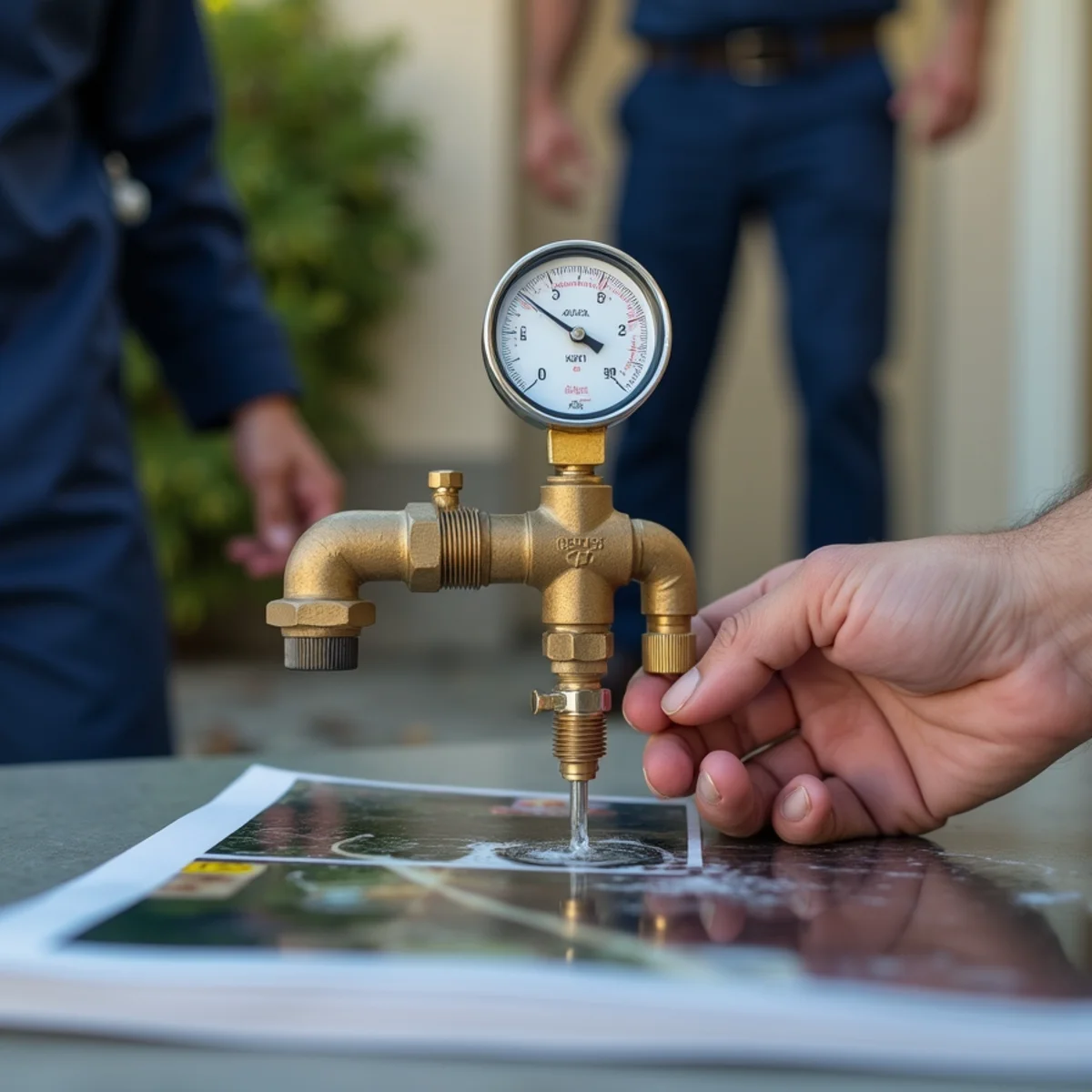
Residential water pressure is measured in pounds per square inch, or psi. A commonly cited comfortable range for homes is roughly 40 to 60 psi. Many plumbing codes flag pressure above 80 psi as too high, and it is a common threshold at which a pressure-reducing valve is recommended.
You can check your pressure with an inexpensive gauge that screws onto an outdoor hose bib or a laundry connection. If your reading sits well above the comfortable range, especially over 80 psi, it is worth addressing.
- Roughly 40 to 60 psi is a commonly cited comfortable range
- Above 80 psi is often considered too high
- A hose-bib gauge gives a quick reading
Take more than one reading
Because supply pressure can change through the day, it is worth taking a couple of readings at different times, including overnight or early morning when municipal demand is low and pressure may peak. Noting the highest reading gives a truer sense of what your plumbing is exposed to than a single midday check. A gauge with a lazy hand that records the peak is especially useful for catching overnight spikes.
How high pressure damages plumbing
The effects of high pressure are spread across the whole plumbing system rather than concentrated in one spot, which is why it can show up as several seemingly unrelated problems at once. A few areas tend to feel the strain first.
Pipes and joints
Constant high pressure stresses pipe walls, joints, and connections. Over time this can loosen fittings, worsen small weaknesses, and in severe cases contribute to a burst pipe or slow pinhole leaks inside walls.
Fixtures and valves
Faucets, toilet fill valves, and shutoff valves wear faster under high pressure. Dripping faucets and running toilets can sometimes trace back to pressure that is too high.
Appliances
Dishwashers, washing machines, and water heaters have inlet valves and hoses rated for a range of pressure. Excess pressure can shorten their life and stress supply hoses, which are a common source of sudden leaks.
Water hammer
High pressure can worsen water hammer, the banging sound when a valve closes quickly, which itself adds stress to the system.
Signs your pressure may be too high
Any one of these can have other explanations, but several together make high pressure a strong candidate. A gauge reading confirms it.
- Banging or knocking pipes when a tap or appliance shuts off
- Faucets that drip or toilets that run without an obvious cause
- Spitting or sputtering from faucets when first turned on
- Supply hoses or connections that leak repeatedly
- A water heater relief valve that discharges frequently
- Unusually forceful flow throughout the house
Thermal expansion and closed systems
There is a related issue that often travels with high pressure: thermal expansion. When water is heated it expands slightly. In an open system that extra volume can push back toward the main, but many homes have a check valve or pressure-reducing valve that creates a closed system, leaving the expanded water nowhere to go.
In a closed system, that expansion can spike pressure briefly each time the water heater runs, stressing the tank, valves, and fixtures. The common remedy is a thermal expansion tank, a small tank that gives the expanding water room to move. If you have a pressure-reducing valve and notice the relief valve on your water heater discharging, thermal expansion is a likely suspect, and a plumber can confirm whether an expansion tank is needed.
How a pressure-reducing valve works
A pressure-reducing valve, or PRV, is the usual device for keeping household pressure in a safe range. It is installed where the main supply enters the home and uses an internal spring and diaphragm to throttle incoming pressure down to a set level, so the pressure downstream stays lower than the pressure coming from the street.
Most PRVs are adjustable within a range and are set at installation. Like any mechanical part, they wear out; a PRV that fails can let pressure climb, or drop it too far. Because they do not last forever, a home that once had comfortable pressure can develop high pressure years later simply because the valve has failed. Replacing a worn PRV is a common fix, and it is work better handled by a professional so the new valve is set correctly.
Why some local homes may see higher pressure
Water pressure can vary with elevation and how a municipal system is designed. Homes at lower elevations in a hillside area, or those on certain supply zones, may receive higher pressure than others. Because the El Dorado Hills area includes hillside and custom homes across a range of elevations, some properties may see pressure on the higher side.
This is a possibility rather than a rule; pressure depends on your specific location and supply. If your home tends to run high, a pressure-reducing valve is the usual remedy. A professional can measure your actual pressure and determine what your system needs. If you have recently noticed forceful flow, banging pipes, or fixtures wearing out sooner than expected, checking the pressure is a sensible first step before assuming the fixtures themselves are at fault.
What to do about high pressure
If a gauge confirms high pressure, the standard solution is a pressure-reducing valve. It is installed where the main supply enters the home and brings pressure down to a safe range. Many homes already have one, and when pressure creeps up, the existing valve may have failed and need replacement.
- Measure your pressure with a gauge to confirm the issue
- Check whether your home already has a pressure-reducing valve
- Have a failed or missing regulator replaced or installed by a professional
- Ask a plumber about a thermal expansion tank if you have a closed system with a regulator
Treat the system as a whole
Reducing pressure to a comfortable range protects your pipes, fixtures, and appliances, and can prevent the slow damage high pressure causes. Because a pressure-reducing valve and any expansion tank are part of a connected system, it is worth having the whole setup checked together rather than piecemeal. A valve that is set correctly today can still drift over the years, so rechecking the pressure periodically is a reasonable habit. If you are unsure whether your pressure is a problem, a plumber can test it and recommend a fix suited to your home.
Need a plumber in El Dorado Hills?
Wedlisse Plumbers helps homeowners across El Dorado Hills and nearby communities. Call or request service any time.
Frequently asked questions
A commonly cited comfortable range is roughly 40 to 60 psi, and pressure above 80 psi is often considered too high. Many codes recommend a pressure-reducing valve above that threshold. A hose-bib gauge lets you check.
Screw an inexpensive pressure gauge onto an outdoor hose bib or a laundry connection, turn that tap fully on with other fixtures off, and read the dial. Taking readings at different times, including early morning, helps catch overnight peaks.
It stresses pipes, joints, fixtures, and appliance valves with every cycle. Over time this can cause dripping faucets, running toilets, leaking hoses, worsened water hammer, and in severe cases pinhole leaks or a burst pipe.
The usual solution is a pressure-reducing valve installed where the main supply enters. Many homes already have one that may have failed. A professional can test your pressure and replace or install the valve as needed.
It can. Excess pressure, or thermal expansion in a closed system, can cause the relief valve to discharge. It is a safety device, so frequent discharge should be investigated by a professional rather than blocked.
It is generally better left to a professional. The valve ties into the main supply and has to be set to the correct pressure, and an incorrect installation or setting can create new problems. A plumber can confirm your pressure, install or replace the valve, and verify the result.
Related articles
What Causes Low Water Pressure?
A trickling shower or slow faucet can have many causes. Here is how to tell whether it is one fixture or the whole house, and what to check next.
What to Do When a Pipe Bursts in Your Home
A burst pipe can release gallons of water in minutes. Here is a calm, step-by-step plan to stop the flow, limit damage, and decide when to call a plumber.
Seven Signs You May Have a Hidden Water Leak
A hidden leak can quietly raise your bill and damage your home for weeks. Here are seven signs worth watching for, and how to check if water is escaping unseen.