Gas & Specialty
Smart Water Shutoff in El Dorado Hills, CA
A leak that starts while no one is home can do a great deal of damage before anyone notices. A supply line behind a wall, a failed washing-machine hose or a water heater that lets go can release water for hours or days, and the repair bill often has more to do with how long it ran than with the leak itself. A smart water shutoff watches the main line, can close the water automatically when it sees a leak pattern, and sends an alert to your phone.
These systems generally monitor flow, pressure and temperature and learn what normal use looks like for your household, so they can flag the continuous flow of a running leak or the small drip that would otherwise go unnoticed on a nightly self-test. Some pair the main-line valve with point sensors placed near high-risk spots. Wedlisse Plumbers installs and services these systems for El Dorado Hills homeowners who want that extra layer of protection.
They are especially worth considering for larger homes with long runs of hidden piping, for second properties, and for houses that sit empty for stretches of the year. We help you understand how they work, where they fit on your plumbing, and what they can and cannot do, so the system matches your home rather than the other way around.
- Residential & commercial service
- Clear service recommendations
- Respectful property protection
- Locally focused coverage
Signs You May Need Smart Water Shutoff
A few things homeowners often notice before calling us:
- A home that sits empty during travel or part of the year
- A larger custom home with long runs of hidden piping
- A finished basement, upstairs laundry or other high-damage areas
- A past water-damage event you would rather not repeat
- A wish to see water use and get leak alerts from your phone
- Older supply lines or connectors you worry about while away
- Appliance hoses feeding a washer, dishwasher or ice maker
Common Causes
- Burst or cracked supply lines behind walls or under floors
- Failed washing-machine, dishwasher or ice-maker hoses
- A slow leak that would otherwise run unnoticed for days
- Water-heater tanks or fittings that begin to leak without warning
- Loose or aging connectors and angle stops around the home
- Unusually high flow that continues when no water should be running
- A dripping fixture that adds up while the house is unattended
How We Approach the Job
- 1
Review your home and goals
We talk through your layout, how often the home sits empty and what you want the system to protect.
- 2
Check the main line
We look at where the main water line enters, the pipe size and material, and power and Wi-Fi availability at that spot.
- 3
Recommend a system
We suggest a shutoff valve, sensors or a combination suited to your plumbing, and explain how alerts and automatic shutoff work.
- 4
Install and set up
We install the valve, connect any sensors, and help configure the app so alerts reach your phone and the shutoff responds.
Your Options
Automatic shutoff valve on the main line
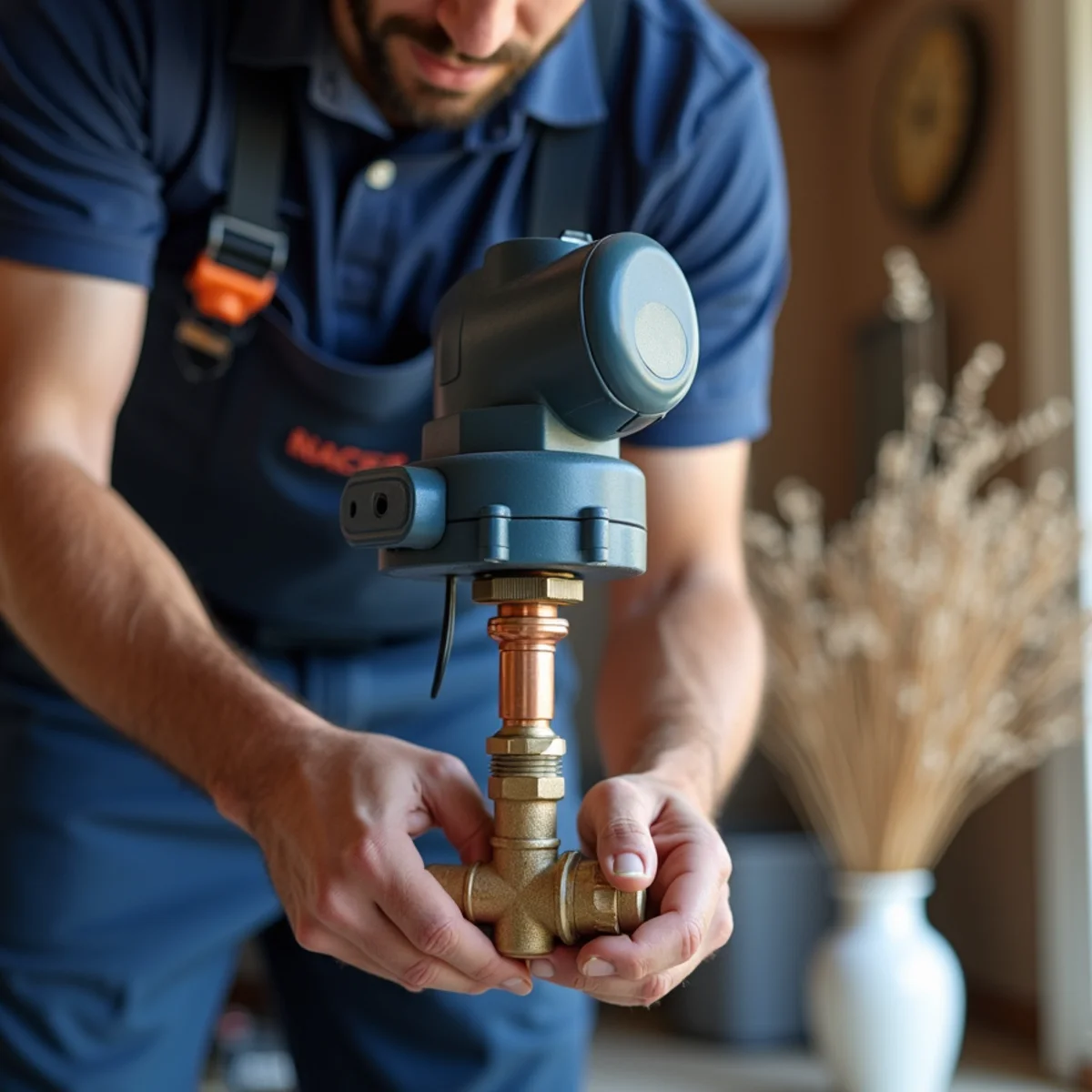
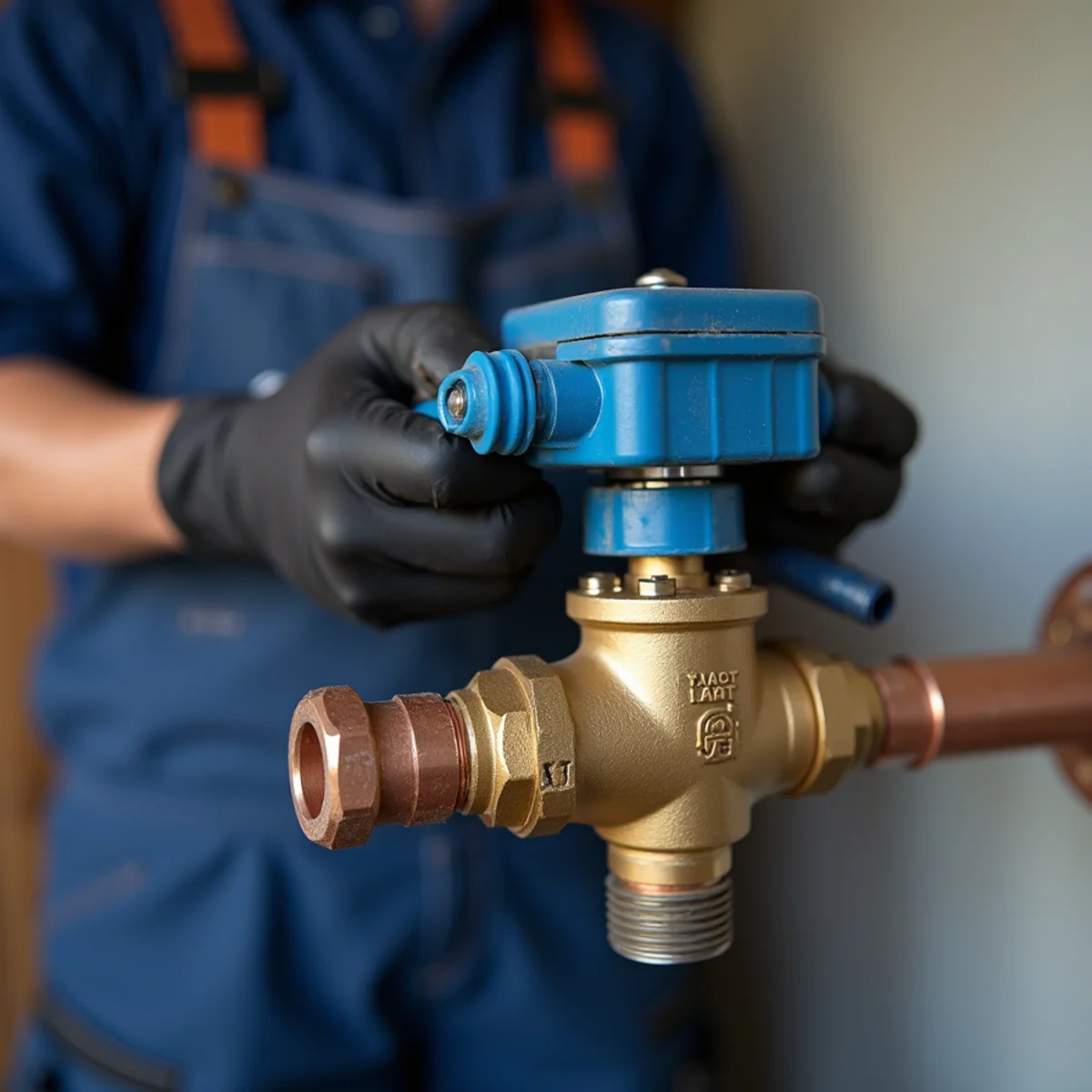
A motorized valve installed on the main line monitors flow and can close the water automatically when it detects a pattern that looks like a leak, such as continuous flow when no fixtures should be running. Because it protects the whole home from one point, it is a common choice for broad coverage. These valves come in different main-line sizes and need power and a wireless connection nearby, which we confirm when we look at where your main enters the home.
Point leak sensors for high-risk areas
Point sensors placed near water heaters, laundry connections, sinks, refrigerators and other risk spots can catch a leak right where it starts and trigger an alert, and in some systems a shutoff. They pair well with a main-line valve, covering both whole-home flow and the specific places where leaks tend to begin, so a slow drip under an appliance does not have to reach the main line before it is noticed.
App alerts, monitoring and nightly checks
Most systems connect to an app that sends alerts to your phone, shows your water use and lets you shut the water off remotely. Many also run a quiet self-test on a schedule that can surface a tiny leak you would never spot on your own. This is especially useful when a home sits empty, since you can respond before a problem spreads, subject to the system having power and a working internet connection.
Service and testing of existing systems
If you already have a smart valve or sensors, we can service the hardware, help re-establish the connection and app setup after a router or account change, and confirm the valve actuates and the sensors report as they should. Testing now and then matters, because a protection system is only useful if it is still working when a leak finally happens.
Not sure what's wrong? Let's take a look.
Describe what's happening and we'll help you figure out the next step.
Benefits of Timely Service
- Water shut off automatically when a leak pattern is detected
- Alerts on your phone, even when you are away from home
- Added protection for empty or seasonally used properties
- Coverage for high-damage areas like laundry and water heaters
- Insight into water use that can reveal a slow, hidden leak
- Remote shutoff so you can respond before damage spreads
Residential
- Main-line automatic shutoff valve installation
- Point leak sensors for at-risk areas
- App setup and alert configuration
- Coordination with a whole-house repipe or leak repair
- Protection planning for second and seasonally empty homes
- Service and testing of existing systems
Commercial
- Leak monitoring for small commercial spaces
- Protection for unoccupied units and off-hours
- Coordination with property managers on alerts
How a smart shutoff decides there is a leak
A smart shutoff does not simply react to a puddle. Main-line systems continuously watch how water moves through the home and compare it against the patterns they have learned, so a flow that keeps going when the house should be quiet, or a small but constant draw that never stops, reads as a possible leak. Many also run a periodic self-test that briefly checks for the tiny flows that indicate a slow drip. Point sensors add a second method, reacting directly to water where it should not be. When a system decides something is wrong, it can send an alert and, on a main-line valve, close the water.
Who benefits most from a smart shutoff
A smart shutoff is optional, and it earns its keep most in certain situations. Larger homes with long, hidden pipe runs give a leak more places to hide and more time to spread. Second homes and houses left empty during travel have no one on site to catch a problem early. Homes with a history of water damage, or with finished spaces and upstairs laundry where a leak would be costly, also tend to gain the most. If you are usually home and your plumbing is in good shape, the value is smaller, though the early alerts on a slow, hidden leak can still be worthwhile.
Often a strong fit for:
- Larger custom homes with long runs of concealed piping
- Second properties and homes left empty for stretches
- Homes with upstairs laundry, finished basements or other high-damage areas
- Households that have already dealt with a costly water-damage event
What a smart shutoff does not replace
A smart shutoff can reduce the damage a leak causes by acting quickly, but it is a layer of protection rather than a substitute for maintenance. It does not stop pipes from failing, and its remote features depend on power and an internet connection, so an outage can limit the alerts even when the valve still closes locally. Keeping supply lines, appliance hoses and fixtures in good shape remains the foundation. A professional can help you decide where a valve and sensors would do the most good, so the system complements your plumbing instead of masking problems.
Areas We Serve
Smart Water Shutoff for customers in El Dorado Hills and selected nearby communities:
Smart Water Shutoff FAQs
Most systems monitor water flow and look for patterns that do not match normal use, such as continuous flow when no fixtures should be running. Some also use point sensors that detect water where it should not be. When triggered, the valve can close and send an alert.
Systems are designed to learn a home's normal use and to let you override or reopen the valve through the app. Unusual but legitimate use, like filling a large tub or running irrigation, can sometimes trigger an alert, which is why the app controls matter. We help set it up to fit your household.
It is optional, and it tends to matter most for larger homes, second properties and houses left empty during travel. If you are home often and your plumbing is in good shape, the value is smaller, though the early alerts can still help with slow, hidden leaks.
The remote alerts and app features rely on power and an internet connection. Many valves will still close on a detected leak locally, but you should confirm the specific system's behavior. We can explain how a given model handles a power or internet outage.
A main-line shutoff valve is installed on the main water line where it enters the home, generally after the meter and any pressure-reducing valve, with power and a wireless signal nearby. During the visit we check the pipe size and material and the available power and connection at that spot before recommending a specific system.
Yes, and many homeowners do. A main-line valve covers whole-home flow, while point sensors watch specific trouble spots like water heaters, laundry connections and under sinks. Together they catch both a large flow event and a small leak that starts in one place, which is a common way to set up broader protection.
Need Smart Water Shutoff in El Dorado Hills?
Call for current service availability, or send a request and we'll follow up to schedule an assessment.
For an active leak or urgent plumbing concern, call for current service availability.